Types of dump trucks: a visual guide to 14 setups and what each is for
Steve Woods · Lead Dispatcher, TruckSprint
Steve Woods leads the TruckSprint dispatch desk and reviews every guide we publish. How we research and update guides.
Updated October 2026
Quick answer
There are 14 common types of dump trucks, from single axle and tandem straight trucks to tri-axles, quads, super dumps, pups, transfers, end, belly and side dumps, articulated and rigid off-highway haulers, and mini and tracked site machines. On the highway, axles and spacing set the legal load: a tri-axle at 22 ft is limited to 56,500 lb gross on the Interstate.
Source: 23 CFR 658.17 (Bridge Formula) and Caltrans Equipment Rental Rates, eff. Sept 2026 · checked 2026-10
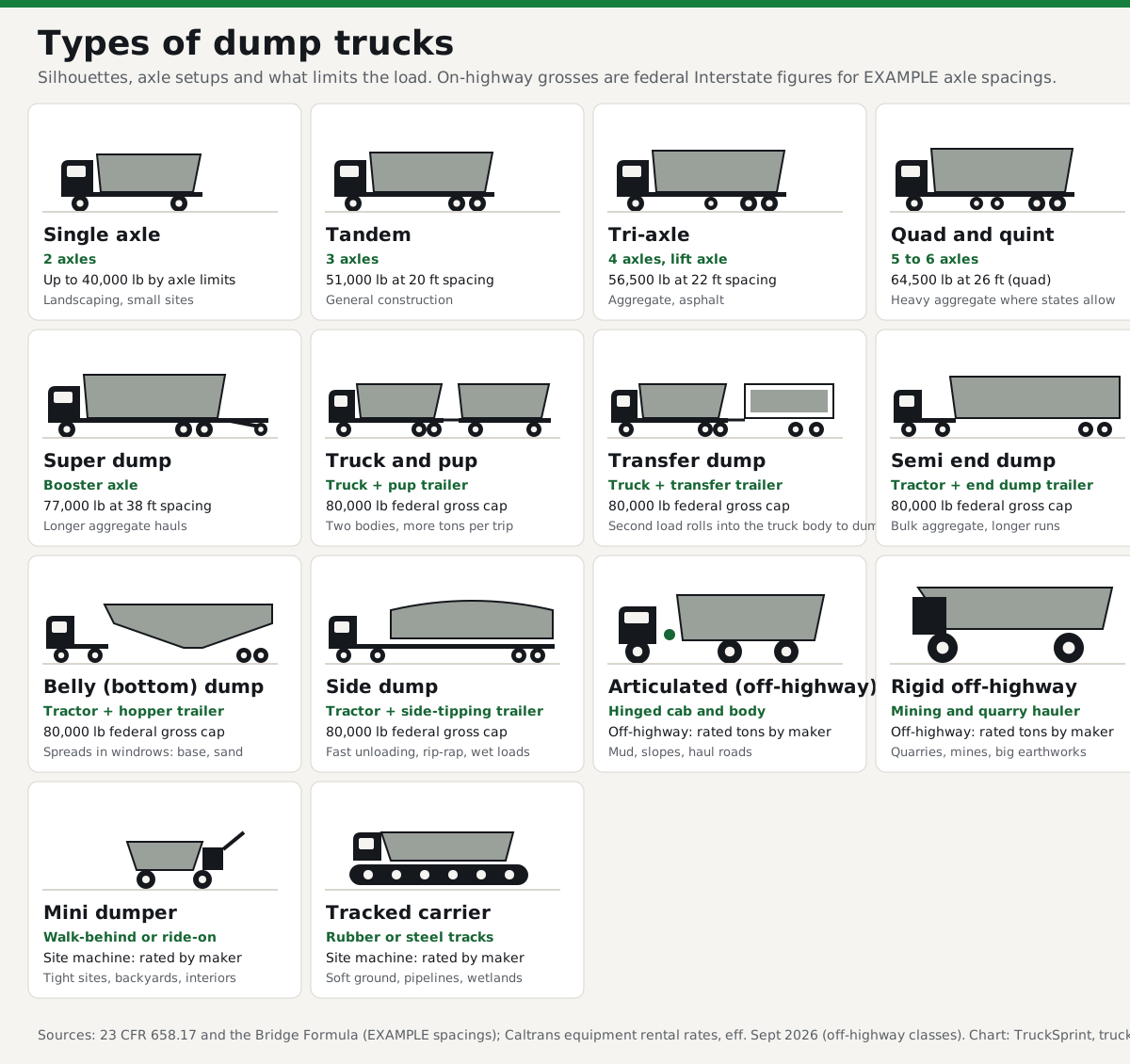
Every setup in the chart exists for a reason: a site with tight access, a material that sticks, a haul that's long enough to justify a second body. I'm Steve, lead dispatcher at TruckSprint. Dump trucks are one of the eleven equipment types we dispatch, and matching the right setup to the job is half of pricing dump work. Here's what each type does and what limits its load.
Straight trucks
Single axle. Two axles, often Class 6 or 7, frequently built under 26,001 lb GVWR so no CDL is needed. Nimble on residential streets and small sites; landscaping material, small deliveries.
Tandem. Three axles, the workhorse of general construction. On the Interstate, about 51,000 lb gross at 20 ft between the first and last axles.
Tri-axle. Four axles with a lift axle that comes down when loaded. About 56,500 lb at 22 ft on the Interstate; popular for aggregate and asphalt.
Quad and quint. Five or six axles with more lift axles. A quad at 26 ft reaches about 64,500 lb on the Interstate, and many states allow more on state roads under their own axle tables.
Super dump. A straight truck with a trailing booster axle that extends the wheelbase, so the Bridge Formula allows more: about 77,000 lb at 38 ft.
Truck-and-trailer combinations
Truck and pup. A dump truck pulling a short dump trailer. Two bodies, both dumping on their own.
Transfer dump. A dump truck pulling a trailer whose container rolls forward into the truck's body to dump after the truck unloads its own. Two loads per trip, one driver.
Both run up to the 80,000 lb federal gross cap on the Interstate, depending on axles and spacing.
Tractor-trailer dumps
End dump. The trailer tips up and unloads out the back. Simple and versatile, but it needs level ground and overhead clearance when raised.
Belly (bottom) dump. Gates under the trailer open to spread material in a windrow while the truck moves. Great for base and sand on road jobs; less suited to large rock.
Side dump. The body tips sideways. Unloads fast, handles rip-rap and wet loads, and is more stable while dumping than a raised end dump.
Off-highway haulers
Articulated. A hinge between the cab and the body lets it steer through mud and slopes on haul roads and earthworks.
Rigid off-highway. Large one-piece haulers for quarries, mines and big earthmoving jobs.
Neither is road-legal for normal highway use. Their capacity is set by the manufacturer's rating, not road weight laws. For a sense of scale, Caltrans's equipment rate schedule (effective September 1, 2026) lists off-highway trucks rated from 10 to 67 tons.
Small site machines
Mini dumpers (walk-behind or ride-on) and tracked carriers move material where trucks can't go: backyards, building interiors, soft ground, pipeline right-of-ways. Capacity is whatever the maker rates.
Which type for which job
| Job | Setups that fit | Why |
|---|---|---|
| Residential deliveries, landscaping | Single axle, tandem | Small footprint, tight access |
| General construction, site work | Tandem, tri-axle | Common, flexible, good payload |
| Aggregate and asphalt runs | Tri-axle, quad, super dump, transfer | More legal tons per trip |
| Long aggregate hauls | Transfer, end dump, belly dump | Up to the 80,000 lb federal cap |
| Road base spread in rows | Belly dump | Spreads while moving |
| Large rock, rip-rap, wet loads | Side dump | Fast, stable unloading |
| Quarries, mines, haul roads | Articulated, rigid off-highway | Off-road payload, rough ground |
| Backyards, interiors, soft ground | Mini dumper, tracked carrier | Access and ground pressure |
What it means for your day
On the highway, the setup decides your legal tons, and legal tons decide per-ton pay. A super dump or transfer can carry far more than a tandem on the same trip, but costs more to buy and run and needs the right license; see starting a dump truck business. For backover and rollover data by source, see dump truck safety statistics. Check your exact spacing with the truck weight limit checker, compare setups in dump truck sizes, and work out loads per day in dump truck capacity. For what the public schedules say each truck costs per hour, see dump truck hauling rates.